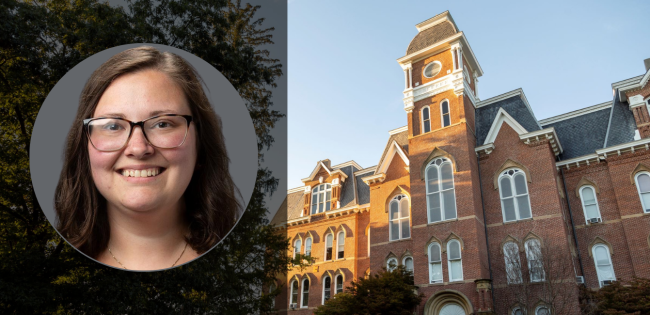
The Waynesburg University Writing Center is pleased to announce that the winner of our Banned Books Week writing contest is Samantha Hetrick. Hetrick is a freshman multimedia journalism major, a reporter for "The Yellow Jacket," and the poetry editor for "Muse and Stone." Her winning entry is included below. Thank you to all who participated in our celebration of Banned Books Week!
To censor books is to censor democracy. From the time we are young, our world view is
driven and created by the literature we consume and the fictional worlds we lose ourselves in. Through reading about other’s struggles and tribulations, we can come to terms with our own while gaining compassion for situations we may never experience. That is why I believe that access to literature is our greatest demonstration of freedom. If we do not have the liberty to choose the books we read, we may not have liberty at all.
When people have the freedom to read, they gain the freedom to think, to dream, and to grow. They are able to understand human rights, science, and emotion. With unlimited access to books, the whole world is at your fingertips. Our own country was created based on what the Founding Fathers read; they were able to take ideas they found to be brilliant and apply them to their own lives. We have the same opportunities to use ideas and change our world today. With books we are all equal, a novel puts us on even footing, setting us in the same perspective, allowing us to gain the same information. What we choose to gain from reading is on us, with access to literature, we are able to decide how and why we will expand our minds.
To put a censor on or limit books is the antithesis of reading. It forces people to think a certain way, have a specific belief, or makes them turn a blind eye to certain topics and issues. The beauty of literature is that the writer is able to pen whatever they feel or believe, and the reader is also able to take or leave whatever pieces they wish. There is no middle man in the written exchange of ideas, and the government cannot create that role no matter how hard they strive. It is not an easy fight, they will continue to try because words are more powerful than any weapon. They have the power to change generations and upheave history.
While we have unrestrained access to literature, we have a near assurance of freedom, because we have the chance to change what we find to be unright and unjust about our world. President John F. Kennedy said in an interview in 1960, “If this nation is to be wise as well as strong… then we need more new ideas for more wise men reading more good books in more public libraries. These libraries should be open to all—except the censor. We must know all the facts and hear all the alternatives and listen to all the criticisms. Let us welcome controversial books and controversial authors.”
Even books we do not agree with are important for our liberties, in fact, especially those books. If we cannot compare and contrast our viewpoints with that of others, how will we ever be able to defend our own? And if we dare to read books that conflict with our preconceived ideas, that is when we will grow not only personally, but as a nation.